
Please support democracy

Without your support, Democracy Watch can't win key changes to stop governments and big businesses from abusing their power and hurting you and your family. Please click here to support democracy now

Lapdog federal Ethics Commissioner again refuses to investigate a clear case — PM Harper helping Peter Penashue with spending and by-election during Elections Canada investigation

Ethics Commissioner Mary Dawson has let dozens of Conservatives off the hook for clear ethics violations, and made more than 80 secret rulings, since 2007 — letter-writing campaign has thousands calling for key changes to ensure effective ethics enforcement


This release was covered by the Globe and Mail, CTV News, the Huffington Post, The Tyee, and 10 other media outlets all publishing the Canadian Press article.


Friday, May 10, 2013

OTTAWA – Today, Democracy Watch released federal Ethics Commissioner Mary Dawson’s refusal to investigate yet another clear case – Prime Minister Harper helping Peter Penashue with a funding announcement and a by-election call while Elections Canada is investigating Mr. Penashue’s last election campaign — and called for key changes to ensure effective ethics enforcement in Canada.

More than 61,000 messages have been sent through Democracy Watch’s letter-writing campaign to MPs on the House of Commons Ethics Committee that is reviewing the federal Conflict of Interest Act, and to other key politicians across Canada.

Democracy Watch submitted a complaint to the Ethics Commissioner after Prime Minister Stephen Harper allowed Mr. Penashue to make a $1.35 million spending announcement in his riding on March 11, 2013, just days before he resigned his seat and after Prime Minister Harper called the by-election before prosecutors had decided whether to charge Mr. Penashue or others involved in his 2011 election campaign for violations of the Canada Elections Act.

“This is yet another clear case where the lapdog federal Ethics Commissioner is ignoring clear ethics rules, and instead using a dangerously narrow and legally incorrect enforcement approach to protect a politician who has improperly furthered the private interest of a friend and colleague,” said Tyler Sommers Coordinator of Democracy Watch.  “The Ethics Commissioner actually makes the absurd claim in her ruling that the ethics law never covers any political decisions Cabinet ministers make, no matter what the situation.”

“Ethics Commissioner Mary Dawson is so ineffective that the media, not her, have revealed all of the ethics violations in federal politics in the past five years, while she has let dozens of Conservatives off the hook for clear violations and made more than 80 secret rulings, and so clearly the ethics law needs to be strengthened to ensure proper and effective enforcement and thousands of Canadians are calling on the House Committee to strongly recommend these and other key changes to stop unethical politicians and lobbyists,” said Duff Conacher, Board member of Democracy Watch.

In a recent ruling involving a situation with Jim Flaherty, the Ethics Commissioner made it clear that the definition of “improperly” includes the standards set out in Prime Minister Harper’s Accountable Government guide for ministers.  That guide requires ministers to “uphold the highest ethical standards so that public confidence and trust in the integrity and impartiality of government are maintained and enhanced” and to “make decisions in the public interest” and to “perform their official duties and arrange their private affairs in a manner that will bear the closest public scrutiny.  This obligation is not fully discharged merely by acting within the law” (Annex A, Part I: Ethical Guidelines and Statutory Standards of Conduct).

It seems very clear that Prime Minister Harper’s recent decisions concerning Mr. Penashue do not uphold the highest ethical standards and are not impartial in a way that enhances public confidence and trust as they are favours that help Mr. Penashue; are not in the public interest because they deny voters key information they have a right to know before they vote in the by-election, and; as a result do not bear the closest public scrutiny, given how clearly they help Mr. Penashue’s private career interest in keeping his job, and pay, as a Member of Parliament.

Despite the Flaherty ruling and the clear and serious ethical issues the Prime Minister’s decisions raise, the Ethics Commissioner dismissed Democracy Watch’s complaint.  In her ruling, the Ethics Commissioner claimed, without providing any convincing evidence or reasons:

  • that Prime Minister Harper and Peter Penashue are not friends (despite all the very friendly things the Prime Minister has done for Mr. Penashue recently);
  • that the Accountable Government guide’s rules apply only if the exact, specific situation complained about is referenced in the guide;
  • that the spending announcement was acceptable because it was focused on enhancing the image of the party (even though clearly in the context it also furthered Mr. Penashue’s private interests), and;
  • that such spending announcements and by-election calls are “political advantages” that are a “government prerogative” and that ethics rules can’t touch them, no matter how unethical and abusive the exercise of the advantage or prerogative is.

There are more than 200 similar cases across Canada of people being let off the hook with no penalty, especially at the federal level, including the following, along with many others who escaped accountability for very questionable actions in past decades, — Prime Minister Harper (who decided in 2007 not to have a full public inquiry into his then-friend Brian Mulroney’s affair with Karlheinz Schreiber),  Nigel Wright, Tony Clement, Christian Paradis, Lisa Raitt, Rick Dykstra, Jim Flaherty, and 25 Conservative Cabinet ministers, ministers of state and parliamentary secretaries in total who along with 35 Conservative MPs handed out government cheques with Conservative Party logos on them, and all MPs who accept sponsored travel from lobbyists.

The Ethics Commissioner is a major part of the problem with ethics enforcement – since 2007 she has rejected at least 80 complaints filed with her without issuing a public ruling (it could be more as she did not disclose the total number of complaints she received in 2008-2009 nor in 2010-2011).  She has received complaints about, or become aware of, at total of at least 100 situations, but has only issued 17 public rulings.  In other words, the Ethics Commissioner may be covering up more than 80 dangerously undemocratic ethics violations.

To finally make corruption in federal politics effectively illegal, the House of Commons Ethics Committee, which is currently reviewing federal ethics rules, must recommend the following key changes:

  • Ensure everyone is covered by ethics rules (currently some ministerial staff and advisers, Cabinet appointees, and staff and advisers of MPs and senators are not covered by any rules);
  • Add a general ethics/integrity rule to the Act and codes to ensure that no one can escape accountability by exploiting technical loopholes (as already applies to public servants, and as is set out in the Prime Minister’s Accountable Government guide for ministers);
  • Add an honesty-in-politics rule to the Act and codes that everyone is required to comply with at all times, even in statements made in Parliament (as already applies to public servants, and as is set out in the Prime Minister’s Accountable Government guide for ministers);
  • Add a rule to the Act and codes prohibiting everyone from being in an apparent or foreseeable potential conflict of interest (as already applies to public servants, and as applies to B.C. politicians, and as the Oliphant Commission report recommended) with anyone or any entity, including for their political interests like fundraising or campaigning for re-election;
  • Delete the loopholes in the Act’s and codes’ definition of “private interest” that allow everyone to take part in general application decisions even if they have a conflict of interest;
  • Require disclosure of all assets worth more than $1,000 (the current threshold of $10,000 is much too high) and require divestment of more assets;
  • Strengthen gift rules to make it clear gifts from anyone, including family and friends, that create even the appearance of a conflict of interest must be refused, and delete the loopholes that allow MPs to accept sponsored travel and volunteer service from lobbyists;
  • Add a rule to the codes prohibiting acceptance of any benefit in return for switching parties, or giving up one’s seat or nomination as a candidate in an election;
  • Add a rule to the Act and codes prohibiting the personal use of government property, especially for political activities;
  • Change to a sliding scale for everyone prohibiting lobbying after leaving office for one year to five years (increasing in length as the decision-making power and potential conflicts of the person increase) to ensure everyone must take a cooling-off period;
  • Require everyone to report to the Ethics Commissioner their post-employment activities to ensure they are complying with their cooling-off period (as the Oliphant Commission recommended);
  • Require the Ethics Commissioner to issue a public ruling for every complaint received, and every time advice is given to anyone;
  • Require the Ethics Commissioner to do regular, random audits;
  • Ban the use of the illegal “conflict of interest screens” the Ethics Commissioner is currently using, and require disclosure of all recusals from decision-making;
  • Require the Ethics Commissioner to impose mandatory minimum penalties for ethics violations that match the penalties for lobbying violations (ie. $50,000 to $200,000 fines and jail terms);
  • Allow anyone to challenge any decision or ruling by the Ethics Commissioner in court for any error of fact or law;
  • Establish the Public Appointments Commission, and close the loopholes in the Lobbying Act to prohibit secret, unethical lobbying, and in Canada Elections Act to prohibit secret donations and loans, and in the Public Servants Disclosure Protection Act to strengthen whistleblower protection and extend it to everyone (including political staff), and strengthen enforcement of all of these laws to prevent related unethical actions.

Democracy Watch and the Government Ethics Coalition will continue pushing all governments across Canada and will encourage Canadians to send a message to politicians until all of these needed changes, and more, are made to ensure honest, ethical politics.

– 30 –

FOR MORE INFORMATION, CONTACT:
Tyler Sommers, Coordinator of Democracy Watch
Tel: (613) 241-5179
[email protected]


Democracy Watch’s Government Ethics Campaign
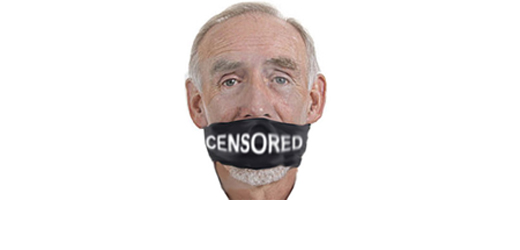
Prime Minister Harper’s muzzling of government scientists dangerously undemocratic, key changes needed to free scientists — Maclean’s Magazine

As far as the government scientist was concerned, it was a bit of fluff: an early morning interview about great white sharks last summer with Canada AM, the kind of innocuous and totally apolitical media commentary the man used to deliver 30 times or more each year as the resident shark expert in the federal Department of Fisheries and Oceans (DFO). So he sent an email off to Ottawa notifying department flaks about the request, and when no response had been received by the next morning, just went ahead and did it.

Audit of 2011 federal election gives even more reasons for public inquiry into Elections Canada’s enforcement actions – along with 3,000 secret complaint rulings since 1997

Changes to law needed before next election to require Elections Canada to enhance pre-election voter registration, have clear rules and better training for election workers, to conduct full public audits after every election, and to disclose all rulings

Thursday, May 2, 2013

OTTAWA – Today, Democracy Watch renewed its call for a public inquiry into Elections Canada following a recent report highlighting major systemic issues with the 2011 federal election.  The report adds to the many reasons for a full investigation, and Democracy Watch has already filed a complaint with the federal Information Commissioner because the Commissioner of Canada Elections is hiding its rulings on more than 3,000 complaints it has received since 1997 about violations of the Canada Elections Act.

“The problems revealed by the federal election audit are likely only the tip of the iceberg of problems with past elections and by-elections given that Elections Canada is hiding its rulings on 3,000 complaints it has received since 1997, and so a full public inquiry is clearly needed,” said Tyler Sommers Coordinator of Democracy Watch.  “The law can, and must, be changed as soon as possible to prevent problems in the next election by requiring Elections Canada to correct the problems, conduct public audits after each election, and disclose all its past and future rulings on complaints.”

Last March, Democracy Watch requested under the federal Access to Information Act the ruling letters sent to complainants by the Commissioner of Canada Elections for a total of 2,982 complaints people have filed during elections since 1997.  Democracy Watch also requested the ruling letters Elections Canada has sent to an unknown number of people who filed complaints in-between elections (the total is unknown because Elections Canada does not disclose any information about complaints it receives in-between elections).

Almost all the other Officers of Parliament — the Auditor General of Canada, the Commissioner of Official Languages for Canada, the Information Commissioner, the Privacy Commissioner, and the Commissioner of Lobbying, are required to disclose final decisions/rulings (under 16.1 or 16.2 of the Access to Information Act).  Elections Canada has only had the discretionary right to refuse to disclose rulings since 2007 after the Conservatives weakened the Act by adding section 16.3 (the Ethics Commissioner is the other officer allowed, unfortunately, to make secret rulings).

“The public must see all of Elections Canada’s rulings to know whether it is an effective democracy watchdog or an ineffective lapdog,” said Sommers. “It is also completely contradictory and hypocritical for Elections Canada to commit to disclosing its rulings on every robocall complaint but refuse to disclose its rulings on other complaints.”

In addition to a full public inquiry, Democracy Watch is calling for the following key changes to ensure election laws across Canada are enforced properly and effectively:

  • All election agencies must be required to regularly audit donations, spending by parties and candidates, and voting, and to conduct post-election audits after each general and by-election;
  • The results of all audits and investigations into complaints or situations must be made public;
  • Penalties for violating election laws must be increased to high amounts to discourage violators;
  • A greater effort and better system for registering voters prior to the election must be established; and
  • Rules around who can vote and how to handle potential voters who do not have proper identification must be clarified and the training process for election officials must be greatly improved.

More than 72,000 messages have been sent by Canadians to key politicians through Democracy Watch’s national letter-writing drive calling for clear requirements to disclose election complaint rulings, and for passage of other key measures for fair elections and strong enforcement.

Democracy Watch has also invited Canadians to send in the rulings they have received from Elections Canada, and will continue to push Elections Canada to disclose all its rulings as the public has a clear right to see the rulings that any law enforcement agency makes on any complaint.  If this information is kept secret, it is a recipe for abuse and corruption as it can allow any agency to hide a biased, unfair, discriminatory, ineffective or otherwise improper enforcement record.

– 30 –

FOR MORE INFORMATION, CONTACT:
Tyler Sommers, Coordinator of Democracy Watch
Tel: (613) 241-5179
[email protected]


Democracy Watch’s Enforce Fair Election Laws Campaign

Democracy Watch calls on Alberta government to have independent prosecutor examine donations and communications from construction companies

Bribery provisions in Criminal Code cover offers of benefits in respect of future government actions, even if the government never does anything

Friday, April 26, 2013

OTTAWA – Today, Democracy Watch called on the Alberta government to have an independent special prosecutor determine whether charges should be laid in the case of political donations and communications from construction companies to Premier Alison Redford and former Premier Ed Stelmach.

“The Criminal Code anti-bribery provisions make it illegal to even offer any money directly or indirectly to any politician for their benefit in respect of anything to be done by that politician, even if the politician never does anything, and in my opinion the communications from the construction company representatives to the premiers cross that line because they link past donations, and future donations, to expected government actions,” said Duff Conacher, Board member of Democracy Watch and Adjunct Professor of Good Governance and Ethics Law at the University of Toronto Faculty of Law.  “Because the donations are to the premier and the ruling party, an independent special prosecutor is needed to determine whether charges should be laid, and given that there are very few past court rulings about these Criminal Code provisions, the special prosecutor should explain fully and publicly if they decide not to prosecute because it seems to me that a full examination of the evidence and detailed ruling by the courts is advisable in this situation.”


Clause 119(1)(b) of the Criminal Code of Canada states:

Corruption and disobedience

Bribery of judicial officers, etc.

119. (1) Every one is guilty of an indictable offence and liable to imprisonment for a term not exceeding fourteen years who

(a) being the holder of a judicial office, or being a member of Parliament or of the legislature of a province, directly or indirectly, corruptly accepts, obtains, agrees to accept or attempts to obtain, for themselves or another person, any money, valuable consideration, office, place or employment in respect of anything done or omitted or to be done or omitted by them in their official capacity, or

(b) directly or indirectly, corruptly gives or offers to a person mentioned in paragraph (a), or to anyone for the benefit of that person, any money, valuable consideration, office, place or employment in respect of anything done or omitted or to be done or omitted by that person in their official capacity.

and clause 121(1)(a)(i) of the Criminal Code states:

Frauds on the government

121. (1) Every one commits an offence who

(a) directly or indirectly

(i) gives, offers or agrees to give or offer to an official or to any member of his family, or to any one for the benefit of an official, or

. . .

a loan, reward, advantage or benefit of any kind as consideration for cooperation, assistance, exercise of influence or an act or omission in connection with

(iii) the transaction of business with or any matter of business relating to the government, or

(iv) a claim against Her Majesty or any benefit that Her Majesty is authorized or is entitled to bestow,

whether or not, in fact, the official is able to cooperate, render assistance, exercise influence or do or omit to do what is proposed, as the case may be; . . .”


As reported by CBC, one construction company official sent Premier Stelmach a letter that states: “We continue to support the Conservative Party in whatever way we can, and please don’t hesitate to contact us and advise us on what we may be able to do to enhance our support of the party and/or support the implementation of these or other initiatives” and the initiatives referred to were appointments to the Alberta Labour Relations Board, infrastructure spending, and changes to labour regulations and legislation.

The other construction company official sent Premier Redford’s staff person an email that stated that two construction companies “. . . both made major contributions to Ms. Redford’s leadership campaign and to the PC’s election campaign fund (in Ledcor’s case up to the legislated maximum). Other members of our coalition were also significant supporters of both the Premier and the PC Party . . . I appreciate that there are huge demands on the Premier’s time and that it is difficult to arrange meetings with her.  However, there will be considerable disappointment and possibly misgivings within our coalition if I do not have something concrete to report next week” concerning developments in the review and change of the provincial labour code.

Given these and other very questionable recent situations involving political donations in Alberta, Democracy Watch also called on the Alberta government to democratize the political finance system in Alberta by:

  • banning donations and loans from businesses and other organizations to any party or candidate (including party leadership candidates, and municipal candidates and parties);
  • limiting individual donations, loans and gifts to a very low amount (no more than $200 annually);
  • requiring disclosure of all donations, loans and gifts received by any party and any type of candidate, whether or not the donation or gift is used for a campaign;
  • requiring disclosure of the employer and major affiliations of all individual donors (to prevent businesses and other organizations from funnelling donations through their employees, executives, board members and their families);
  • establishing a base level of per-vote public financing for political parties (no more than 50 cents per vote), and;
  • requiring Elections Alberta to conduct regular audits of donation patterns to reveal violations and track connections between donations and government actions.

“While the corrupting, democracy-undermining influence of secret money and bribes can unfortunately never be stopped, the Alberta government can help a lot by banning business and organization donations and loans to political parties and candidates, setting a very low limit for individual donations and loans, requiring disclosure of all donations, loans and gifts, establishing public financing, and strengthening enforcement,” said Tyler Sommers, Coordinator of Democracy Watch.

Other than in Quebec, donation limits across Canada are much too high, and other than federally and in Manitoba and Quebec corporations and unions and other organizations are allowed to donate.  As well, other than at the federal level and in Ontario, donation disclosure rules are much too weak (and even those jurisdictions have loopholes in their disclosure rules).

And across the country, election agencies either lack investigation and auditing powers, or are failing to do regular audits, and penalties are too weak, all of which encourages violations.

Democracy Watch and its nation-wide Money in Politics Coalition, made up of 50 citizen groups with a total membership of 3 million Canadians, will continue pushing until all laws across Canada prevent the undue influence of money in politics, and the key democratic principle of one person, one vote is upheld in our political finance system.

– 30 –

FOR MORE INFORMATION, CONTACT:

Tyler Sommers, Coordinator of Democracy Watch

Tel: 613-241-5179

Email: [email protected]


Democracy Watch’s Money in Politics Campaign

Construction companies in Alberta link their donations to government actions, raising questions of bribery — CBC.ca

A representative of a coalition of construction companies and anti-union contractors lobbied Premier Alison Redford by linking large political donations to Redford and to the provincial Conservative party with political promises to revise Alberta’s labour code, according to documents obtained through Freedom of Information.

Finance Minister Flaherty could own bank stock and push to keep bank interest rates, and profits, up – and 9 other reasons Canadians should be concerned about review of federal ethics rules

Thursday, April 25, 2013

OTTAWA – Today, Democracy Watch and the Government Ethics Coalition set out 10 reasons Canadians should be concerned about the current review of federal ethics rules by the House of Commons Ethics Committee, and proposed 30 key changes to the rules, enforcement and penalties needed to have ethical federal politics.

The 10 reasons are as follows (and there are 200 cases total that reveal serious flaws):

  1. Finance Minister Jim Flaherty could own bank stock and push to keep bank interest rates, and profits, up (in fact, he already has pushed to keep mortgage rates up), because of a huge loophole in federal ethics rules that allows ministers, their staff, appointees and government officials to profit from their decisions as long as their decision is of “general application” (the cases of Nigel Wright and Andrew Cash also show clearly that this huge loophole must be closed because the loophole means federal ethics rules do not apply to 99% of decisions and actions by policy-makers – a new rule prohibiting even being in an appearance of a conflict of interest must be passed;
  2. Everything unethical that former Prime Minister Brian Mulroney did with arms lobbyist Karlheinz Schreiber is still legal (the federal Conservatives haven’t even responded to the recommendations made in the May 2010 report of the Oliphant Commission);
  3. A federal politician, staff person, appointee or senior government official could blatantly lie to the public every day, and even though the Prime Minister’s own guide says that is wrong, no one can file a complaint that will result in a ruling and penalty for being a misleader;
  4. At least 50 federal Cabinet ministers have been let off the hook in the past 20 years, along with dozens of MPs, senators, political staff, Cabinet appointees and government officials, for doing things that any reasonable person would say were unethical, and the federal Ethics Commissioner is a czar whose rulings, no matter how flawed, cannot be challenged in court;
  5. More than 100 federal Cabinet ministers, Cabinet staff, and senior government officials have left their positions since 2008 and federal Ethics Commissioner Mary Dawson and Commissioner of Lobbying Karen Shepherd have no idea what they are doing or if they are complying with the five-year ban on being a registered lobbyist (because there is no requirement in the rules to report to the commissioners during the five-year period);
  6. Any member of the public could give federal Ethics Commissioner Mary Dawson clear evidence of Prime Minister Harper making a decision that helps his wife, and Commissioner Dawson doesn’t have to investigate (she is only required to investigate when an MP or senator files a complaint);
  7. Christian Paradis, Jim Flaherty, Lloyd Sullivan, Colin Carrie and Eve Adams were found guilty of violating federal law – the Conflict of Interest Act – and none of them has paid any penalty of any kind;
  8. Federal Ethics Commissioner Dawson has made 80 secret rulings since 2007 – some of which are likely hiding serious violations of the Act, MPs code or Senate Code;
  9. Bruce Carson, Rahim Jaffer, and more than 80 others have been caught but have not been prosecuted for failing to register as lobbyists, and there are likely many more, and;
  10. Many federal lobbyists know other people who are lobbying illegally, but the Commissioner of Lobbying doesn’t do audits of Cabinet ministers’ communications with stakeholders and so has no chance of catching these illegal lobbyists.

“Canadians are justifiably outraged that politicians across Canada for the past 145 years have failed to pass strong, clear, transparent ethics rules that are well-enforced with mandatory high penalties, and that this failure has allowed dozens of politicians and public officials to be let off the hook when they have clearly violated the rules or done something that most people find unethical, including at least 50 federal Cabinet ministers in the past 20 years, and many other politicians just in the past month,” said Tyler Sommers, Coordinator of Democracy Watch. “The committee reviewing federal ethics rules must, finally, take a much-needed step forward and set a new national standard with strong reports calling for changes to close loopholes, clear up rules, strengthen transparency and enforcement, and increase penalties.”

“Dishonesty, unethical fundraising and unethical decision-making in politics are all legal across Canada, and Canadians are more likely to get caught parking their car illegally than politicians are likely to get caught violating key ethics rules, and the penalties for illegal parking are often higher than for being an unethical politician or government official,” said Duff Conacher, Board member of Democracy Watch.  “This dangerously undemocratic fiasco must finally be stopped with clear, strong rules and enforcement and penalties.”

– 30 –

FOR MORE INFORMATION:

Tyler Sommers, Coordinator of Democracy Watch

Tel: 613-241-5179


Democracy Watch’s Government Ethics Campaign