Please support democracy

Without your support, Democracy Watch can't win key changes to stop governments and big businesses from abusing their power and hurting you and your family. Please click here to support democracy now

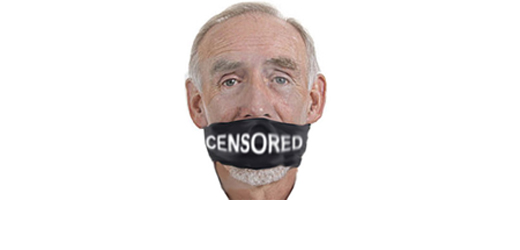
Groups file complaint with federal Information Commissioner calling for investigation of muzzling of federal scientists

Report highlights federal Conservatives muzzling scientists like former Bush administration did

Send a letter to Prime Minister Harper calling on him to stop muzzling scientists by clicking here


This release was covered in the Globe and Mail, Canada.com, Vancouver Sun, Ottawa Citizen, The Tyee, Global News, Calgary Herald, Sun News, Maclean’s Magazine, CBC News, Jian Ghomeshi on CBC Radio’s Q Show, CBC radio afternoon shows in 9 cities across the country, and 6 other media outlets


Wednesday, February 20, 2013

OTTAWA – Today, Democracy Watch, in partnership with the Environmental Law Clinic of the University of Victoria, filed a complaint with the federal Information Commissioner and called for a full investigation following the release of a report on the lack of freedom of federal government scientists to speak with the public and journalists.

The complaint is being filed as a new federal government policy that attempts to muzzle other scientists who do research with federal government scientists recently came to light.

As the report details, in contrast to President Obama who issued a policy that says government scientists can speak freely about the results of their research, the federal Conservatives have muzzled government scientists in the same way former U.S. President George W. Bush did.

“In sharp contrast to past Canadian practice and current U.S. Government practice, the federal government has recently made efforts to prevent the media and the general public from speaking to government scientists,” said Tyler Sommers, Coordinator of Democracy Watch and Chairperson of the Open Government Coalition.  “This is research that taxpayers have paid for and without it society cannot make informed choices about critical issues.”

“Canadians cannot make smart choices about critical issues such as climate change, oil sands development, and environmental protection if the public does not have full, timely access to the Government’s best scientific knowledge on those issues.  This is why we’ve filed this complaint and why we are asking for a full investigation into whether federal government policy forcing scientists to jump through hoops before speaking with the media violates the spirit of access to information law” said Professor Calvin Sandborn, Legal Director of the UVic Environmental Law Clinic.

The report produced by Democracy Watch in partnership with the Environmental Law Clinic of the University of Victoria involved access to information requests, conversations with non-profit and charitable organization representatives, and interviews with current and former public servants.  It highlights access to information policy changes and their consequences at Environment Canada, the Department of Fisheries and Oceans, Natural Resources Canada, the National Research Council, and other federal government departments.

The report details several situations where changes to information policies prevented scientists from commenting on research or responding to questions from the media, and documents illustrative cases, such as one  where public servants discussed the “tone” they believed the article would take prior to deciding whether to allow scientists to speak with journalists.  It also showcases the general trend toward limiting information in Canada compared to the increase in freedom and openness in the United States.

Government secrecy is not just a federal government problem, and so Democracy Watch and the national Open Government Coalition it coordinates launched its national Open Government Action Alert which makes it easy for Canadians to send a letter to the federal Information Commissioner (who is currently consulting the public on needed changes to the federal Access to Information Act), and to key politicians across Canada, calling for changes to strengthen open government laws and enforcement in every jurisdiction.

Systemic problems in the federal government were revealed recently by Canada’s Information Commissioner Suzanne Legault, who publicly criticized Canada’s access to information system highlighting that fewer requests were answered within 30 days in 2011-12 than during the previous year and about 15 percent of applications were being responded to late, even though government departments are able to grant themselves lengthy extensions.

In response to the many loopholes that exist in the access to information laws across Canada, and the lack of enforcement and lack of audits to ensure people are following the law in some jurisdictions, and, Democracy Watch and the Open Government Coalition call for the following 8 key changes:

  1. any type of record created by any entity that receives significant funding from or is connected to the government, or was created by the government and fulfills public interest functions, should be automatically covered by access to information laws and systems (as in the United Kingdom);
  2. all exemptions under access to information law should be discretionary, and limited by a proof of harm test and a public interest override (as in B.C. and Alberta);
  3. the access to information law and system should require every entity covered (as in the United Kingdom, U.S., Australia and New Zealand): to create detailed records for all decisions and actions and factual and policy research; to routinely disclose records that are required to be disclosed; to assign responsibility to individuals for the creation and maintenance of each record, and; to maintain each record so that it remains easily accessible;
  4. the access to information law and system should allow anyone who does factual or policy research for the government to speak to the media and publicly about the topic;
  5. severe penalties should be created for not creating records, for not maintaining records properly, and for unjustifiable delays in responses to requests;
  6. the Information Commissioner should be given explicit powers under the access to information: to order the release of a record (as in the United Kingdom, Ontario, B.C. and Quebec); to penalize violators of the law, and; to require systemic changes in government departments to improve compliance (as in the United Kingdom);
  7. funding to the access to information system and enforcement should be increased to solve backlog problems instead of increasing administrative barriers, and fees for access should be lower overall and standardized, and;
  8. Parliament must be required to review the ATI Act every 5 years to ensure that problem areas are corrected.

– 30 –

FOR MORE INFORMATION, CONTACT:
Tyler Sommers, Coordinator of Democracy Watch and Chairperson of the Open Government Coalition
Tel: (613) 241-5179
[email protected]

Democracy Watch’s Open Government Campaign


SUMMARY OF REPORT

U.S. Government Policy

After President Barack Obama was elected in 2009 he instructed federal agencies to develop “scientific integrity policies” to outline guidelines for scientists and other civil servants to follow when interacting with the media.  In late 2011, the U.S. National Science Foundation and the U.S. National Oceanic and Atmospheric Administration issued such integrity policies which not only allow scientists to speak freely with the media, but allows them to actively approach such interaction.

Findings by federal Canadian government department

Environment Canada

Implemented the Media Relations Policy in November 2007 requiring “Media Relations Headquarters” to “Coordinate all media calls coming into the department.”  Upon receiving a media call the individual is to inform their immediate supervisor or media relations contact who will then inform them of the best way to handle the call including “asking the program expert to respond with approved lines, having Media Relations respond, [or] referring the call to the Minister’s Office.”  Environment Canada clarified this system with the following points:

  •  ”All media requests – including interviews with Environment Canada scientists – are routed through the media relations team. A media relations officer then liaises with the appropriate official to identify the right spokesperson to respond to the request.”
  • “On other calls [any calls other than routine inquiries for weather information], EC [Environment Canada]must consult the Minister’s office and obtain approval before proceeding with providing responses to reporters.”
  • “…media relations provides a proposed response and recommendations to the minister’s office for approval as to whether an interview will be scheduled or a written response will be provided.”

In action this policy has led to the inability of scientists to speak about the work that they conducted, including preventing Environment Canada scientist David Tarasick from speaking about his research titled “Unprecedented Arctic ozone loss in 2011″ in the fall of 2011 until two weeks after the report was released when all news stories on the subject had been published without comments from Mr. Tarasick.

It resulted in scientists attending the International Polar Year 2012 conference in Montreal being told, if approached by journalists, to “ask them for their business card and tell them you will get back to them with a time for [an] interview” and that Media Relations would schedule and attend any interviews. Media relations employees were also sent to shadow Canadian government scientists who attended the conference to monitor and record their conversations.

The policy also resulted in scientists attending the Society of Environmental Toxicology and Chemistry 32nd Annual Meeting in Boston to be issued a “Q&A Package” containing 20 expected questions and the answers to be given by designated spokespersons and directions to respond to some questions with “I’m a scientist.  I’m not in a position to answer that question, but I’d be happy to refer you to the appropriate spokesperson.”

In 2010, under access to information, an internal Environment Canada document examining the effects of the Media Relations Policy was released.  According to the document:

  • Scientists noticed a major decline in the number of media requests they received;
  • Media coverage of climate change science reduced by over 80 percent;
  • Scientists were very frustrated with the new process, feeling the intent was to prevent them from speaking to the media;
  • There was a widespread perception among Canadian media that Environment Canada scientists were being muzzled.

Department of Fisheries and Oceans

The communications policies for the Department of Fisheries and Oceans are outlined in the National Media Relations and Spokesperson Policy.  According to this policy communications staff should be the “first point of contact for media” and emphasizes the involvement of communications prior to interviews regarding certain “high profile” or “controversial” issues.  Examples of these issues include oil and gas industry issues, seal fishery issues, aboriginal issues, Northwest Atlantic Fisheries Organization related issues, and cod fishery issues.  Communications dictates whether or not responses will be provided and who the spokesperson will be providing no guidelines for how these decisions are made.

In practice this policy prevented Department of Fisheries and Oceans scientist Kristi Miller from discussing her research examining sockeye salmon populations in rapid decline as the Privy Council Office would not grant Miller permission to speak about her research because of the Cohen Commission – a judicial inquiry ordered by Prime Minister Harper to look into the decline of the salmon.  She was eventually permitted to speak about her research months later, testifying at the Commission.

Natural Resources Canada

In March 2010 Natural Resources Canada implemented a new media relations policy, which was described by the western regional communications manager for NRC: “we have new media interview procedures that require pre-approval of certain types of interview requests by the minister’s office.”

In April 2010 Scott Dallimore and a team of scientists published a study about a colossal flood that had occurred in northern Canada almost 13,000 years ago, however when journalists attempted to contact Dallimore they were told he was required to receive pre-approval from the Minister of Natural Resources.  Dallimore attempted to tell Communications that the study was not politically sensitive and that it had no anticipated links to minerals, energy, or anthropogenic climate change, however staff insisted on pre-approval.  Eventually approval was granted, but not until after the deadlines for journalists had passed and stories had been published.

National Research Council

In March 2012, Tom Spears, a reporter for the Ottawa Citizen was gathering information for a story on regional snowfall patterns and came across a joint project between NASA and Canada’s National Research Council.  Spears contacted NASA and was able to speak directly to a scientist about the project, when he contacted the National Research Council to request an interview he received a response a day after his acknowledged deadline consisting of five bullet points lacking even basic information about the projects goals.  He filed access to information requests to learn what happened behind the scenes and found documents showing a day long public relations ordeal that involved 11 government employees and over 50 emails discussing whether an interview was necessary and the “tone” of the request.

Other cases

In the fall of 2012 an extensive beef recall was issued after meat tainted with E. coli bacteria was discovered in an Alberta food packing plant.  George Da Pont, president of the Canadian Food Inspection Agency attended a live interview to discuss the government’s handling of the recall, but was interrupted mid-sentence and taken away from cameras by Agriculture Minister Gerry Ritz.

In April 2011 the Ottawa Citizen published an article about the Department of National Defence’s handling of taxpayer dollars and called for a hunt for source documents.  The article prompted official to issue a directive to all Canadian Forces members as well as civilian employees directing them to give all papers that crossed their desk a second glance with an eye to keeping it hidden.

Abolishing Senate easy way to achieve Triple-E


Letter to the Editor by Democracy Watch Coordinator Tyler Sommers published in the Epoch Times, Rabble.ca, and Troy Media on February 13th, 2013 and in the Winnipeg Free Press on February 14th, 2013


The recent scandals involving senators offer more reasons to question the Senate’s continued existence. Senators currently control investigations into other senators’ ethics, spending, attendance and actions overall, and enforcement of the rules, and the rules are very weak and/or there are no penalties for violations in most cases. This is a completely ineffective system undermined by rampant conflicts of interest — and senators are not even talking about changing it.

While there are many proposals to reform the Senate, they all leave or create more problems than they solve, and all require changes to the Constitution (as Prime Minister Harper will soon learn when the Supreme Court of Canada rules on his reference case) — so abolishing the Senate is no more difficult than any other option.

An elected Senate will result in gridlock with the House, as happens in the U.S., because both bodies will have the democratic legitimacy to reject each other’s proposals. And term limits for senators will not solve any of the Senate’s many other accountability problems.

The Senate supposedly exists to provide a “sober second thought” review of House bills, but many senators are on the boards of big businesses and so are essentially inside-government lobbyists — again, a system undermined by rampant conflicts of interest.

As well, the Senate has never developed a new proposal that was not already being advocated by some think-tank or advocacy organization — so it is not needed to generate new policy ideas in any area.

Finally, the Senate is supposed to balance the representation of Canada’s regions in the federal Parliament. This goal could easily be achieved by increasing the number of seats from some regions in the House of Commons. This would go against the democratic principle of representation by population, but so does an elected Senate, and in any case in a federation such as Canada, that principle is always ignored somewhat in order to fulfil the goal of ensuring all regions are well-represented.

For all these reasons, the most simple, least costly, and therefore best solution is to abolish the Senate and incorporate more regional representation into the House of Commons.

If Prime Minister Harper had initiated a broad consultation seven years ago to make these changes, instead of playing games by introducing so-called Senate reform bills again and again but doing nothing to move them through Parliament, we would be much closer to the goal of having an equal, elected and effective Parliament (which has always been the goal of Senate reform).


For more information, see Democracy Watch’s Voter’s Rights Campaign

New website counter tracks how long federal Conservatives have violated Parliament’s deadline for anti-robocall law

More than 63,000 messages sent in anti-robocall, pro-election law enforcement letter-writing drive

Wednesday, February 13, 2013

OTTAWA – Today, Democracy Watch launched its online counter to track how much time has passed since the federal Conservatives have violated Parliament’s deadline for introducing a bill to restrict election fraud robocalls and strengthen election law enforcement.  As of today, the Conservatives have been in violation of the resolution for more than 19 weeks.

The House of Commons passed a resolution unanimously last March setting a deadline of the end of September for the Conservatives to introduce the bill.

Democracy Watch called on the federal Conservatives to end their negligence and introduce the bill.

Democracy Watch’s national letter-writing and petition drive has resulted in Canadians sending more than 63,000 messages to key politicians across Canada calling on them to pass effective laws to stop election fraud robocalls, and to strengthen enforcement of election laws.

Democracy Watch is calling for a law that requires anyone who transmits an election-related robocall to confirm the identity of the person or organization who makes or pays for the call, and for a mandatory penalty for anyone wins an election through election fraud of loss of their seat and a ban on running in another election for at least five years.

To their credit, the federal Liberals, federal NDP and Alberta Conservative government have all introduced bills to restrict election fraud robocalls.

“The new counter shows how negligent the Conservatives are being in failing to walk the walk by banning election fraud robocalls.” said Tyler Sommers, Coordinator of Democracy Watch.

False robocalls were received by tens of thousands of voters in more than 230 ridings during the spring 2011 federal election, and were also used to mislead voters in some provincial elections.

Measures to make false robocalls illegal and essentially impossible will help, but there are also enforcement problems.  Elections Canada is investigating the false robocalls from the 2011 federal election, but there are serious questions about its enforcement.

Elections Canada has failed to disclose the rulings it has made on more than 2,000 complaints it received from 1997 to 2010, and more than 1,000 complaints it received during the 2011 federal election.  It has also recently made some very questionable rulings.

Elections Canada must be required to disclose every ruling it makes to ensure that it proves it is enforcing the law fairly and properly (and election agencies across Canada must also be required to disclose all their rulings).

Democracy Watch is calling on Canadians to send a letter and to sign the petition that both call not only on federal politicians to introduce and pass a law to stop false election robocalls and strengthen enforcement, but also for politicians in every province and territory to pass similar laws that apply to their provincial, territorial and municipal elections.

– 30 –

FOR MORE INFORMATION, CONTACT:

Tyler Sommers, Coordinator of Democracy Watch
Tel: 613-241-5179
Email: [email protected]
Internet: http://democracywatch.ca

Democracy Watch’s Voter’s Rights Campaign


House Ethics Committee must require Ethics Commissioner today to disclose more than 80 secret rulings since 2007

Commissioner has rejected more than 80 complaints since 2007 without disclosing any details or reasons – in her 20 public rulings, she has found only 4 people guilty, and has let dozens of Cabinet ministers, staff and MPs off the hook with no penalty

Group launches national letter-writing campaign to push the Ethics Committee and the government to strengthen federal ethics rules and enforcement in 30 key ways – public servant ethics rules and penalties are much stronger than politicians

Monday, February 11, 2013

OTTAWA – Today, with federal Ethics Commissioner Mary Dawson testifying at the Committee this afternoon, Democracy Watch and the national Government Ethics Coalition called on the House Access to Information, Privacy and Ethics Committee to require Commissioner Dawson to disclose a summary of the more than 80 complaints she has rejected since 2007 with secret rulings.

The House Ethics Committee is finally, eight months after the legal deadline, undertaking the mandatory five-year review of the Conflict of Interest Act.  Democracy Watch and the Government Ethics Coalition also called on the Procedure and House Affairs Committee to stop holding secret meetings reviewing the MPs’ ethics code, mainly because when the Committee did that in 2007 and 2009 it weakened the code both times.

Democracy Watch and the Coalition launched a national letter-writing campaign to make it easy for voters across Canada to send a letter to both committees, and to key politicians across Canada, calling on them to strengthen ethics rules in 30 key ways.

According Ethics Commissioner Dawson’s annual reports, from 2007 to April 2012 she rejected at least 83 complaints filed with her without issuing a public ruling (it could be more as she did not disclose the total number of complaints she received in 2008-2009 nor in 2010-2011).

During that time period, Commissioner Dawson received complaints about, or became aware of, a total of at least 100 questionable situations, but she only issued 17 public rulings, and only found 3 people guilty of violating ethics rules (a few more were found guilty of violating administrative rules, like missing filing deadlines etc.).

“The federal Ethics Commissioner may be covering up more than 80 dangerously unethical situations that have happened since 2007, and so MPs must require her to disclose all her past rulings, and all her future rulings,” said Duff Conacher, Board member of Democracy Watch and Chairperson of the 31-member group, nation-wide Government Ethics Coalition. “Also, to end the negligent enforcement of federal ethics rules, the Ethics Commissioner must be required to conduct regular, random audits and required to penalize anyone who violates ethics rules with high fines, and anyone must be allowed to challenge the Ethics Commissioner’s rulings in court.”

The cases of the following people being let off the hook with no penalty, along with many others who escaped accountability for very questionable actions in past decades, show how much federal ethics rules and enforcement are an ongoing bad joke — Prime Minister Harper, Nigel Wright, Tony Clement, Christian Paradis, Lisa Raitt, Rick Dykstra, Jim Flaherty, and 25 Cabinet ministers, ministers of state and parliamentarians who along with 35 Conservative MPs handed out government cheques with Conservative Party logos on them, and all MPs who accept sponsored travel from lobbyists.

The Conflict of Interest Act and the MP and senator ethics codes are so full of loopholes, they should be called the “Almost Impossible to be in a Conflict of Interest Rules” — and even worse the rules don’t even apply to the staff and advisers of MPs and senators.  Currently, because of these huge loopholes, the Act and codes do not apply to 99% of the decisions and actions of the people covered by the Act and codes.

The ethics codes that federal politicians have imposed on public servants contain much stronger rules than the rules the politicians have written for themselves, and the penalties are stronger, including the possibility of being fired.

“Unethical decision-making in federal politics is legal, even by Cabinet ministers, and some political staff and appointees are still not covered by any ethics rules, so loopholes must be closed and enforcement strengthened to finally stop dangerously undemocratic and corrupting actions and relations with lobbyists,” said Conacher.

– 30 –

FOR MORE INFORMATION, CONTACT:
Duff Conacher, Board member of Democracy Watch
Chairperson of the Government Ethics Coalition
Tel: (613) 241-5179
[email protected]

Democracy Watch’s Government Ethics Campaign


House Committees must recommend that federal Conflict of Interest Act and MP and Senate ethics codes and enforcement be changed in 30 key ways to finally make corruption in federal politics illegal

Act and MP and senator ethics codes are so full of loopholes they should be called “Almost Impossible to be in a Conflict of Interest Rules” – ethics rules for federal public servants are much stronger than the rules for politicians, as are penalties

Cases since 2007 involving dozens of Cabinet ministers, staff and MPs being let off the hook with no penalty show how much federal ethics rules and enforcement are a bad joke – will Prime Minister Harper finally get tough on undemocratic crimes?

Federal Ethics Commissioner has rejected more than 80 complaints with secret rulings since 2007 – disclosure must be required and penalties increased

Duff Conacher is testifying before the Committee at 3:30 pm on Wed. in Room 237-C, Centre Block, Parliament Hill, Ottawa

Wednesday, February 6, 2013

OTTAWA – Today, in its submission and testimony before the House Access to Information, Privacy and Ethics Committee, Democracy Watch and the national Government Ethics Coalition called on the Committee to recommend strengthening the federal Conflict of Interest Act and MP and senator ethics codes, and enforcement system, in 30 key ways (and changing related laws in 14 key ways) to finally make corruption in federal politics illegal.  The House Ethics Committee is finally, eight months after the legal deadline, undertaking the mandatory five-year review of the Act.

Democracy Watch and the Government Ethics Coalition also called on the Procedure and House Affairs Committee to stop holding secret meetings reviewing the MPs’ ethics code, mainly because when the Committee did that in 2007 and 2009 it weakened the code both times.

The Conflict of Interest Act and the MP and senator ethics codes are so full of loopholes, they should be called the “Almost Impossible to be in a Conflict of Interest Rules” — and even worse the rules don’t even apply to the staff and advisers of MPs and senators.  Currently, because of these huge loopholes the Act and codes do not apply to 99% of the decisions and actions of the people covered by the Act and codes.

The ethics codes that federal politicians have imposed on public servants contain much stronger rules than the rules the politicians have written for themselves, and the penalties are stronger, including the possibility of being fired.

The cases of the following people being let off the hook with no penalty, along with many others who escaped accountability for very questionable actions in past decades, show how much federal ethics rules and enforcement are an ongoing bad joke — Prime Minister Harper, Nigel Wright, Tony Clement, Christian Paradis, Lisa Raitt, Rick Dykstra, Jim Flaherty, and 25 Cabinet ministers, ministers of state and parliamentarians who along with 35 Conservative MPs handed out government cheques with Conservative Party logos on them, and all MPs who accept sponsored travel from lobbyists.

The Ethics Commissioner is a major part of the problem with ethics enforcement – since 2007 she has rejected at least 80 complaints filed with her without issuing a public ruling (it could be more as she did not disclose the total number of complaints she received in 2008-2009 nor in 2010-2011).  She has received complaints about, or become aware of, at total of at least 100 situations, but has only issued 17 public rulings.  In other words, the Ethics Commissioner may be covering up more than 80 dangerously undemocratic ethics violations.

“Unethical decision-making in federal politics is legal, even by Cabinet ministers, and some political staff and appointees are still not covered by any ethics rules, so loopholes must be closed and enforcement strengthened to finally stop these dangerously undemocratic and corrupting actions,” said Duff Conacher, Board member of Democracy Watch and Chairperson of the 31-member group, nation-wide Government Ethics Coalition.

“To end the negligent pattern of enforcement of the federal ethics rules, the Ethics Commissioner must be required to conduct regular, random audits, and to investigate and rule publicly whenever there are questions about violations, and the Commissioner must be given the power, and required, to fine anyone who violates ethics rules,” said Conacher. “Also, the Commissioner must not be eligible for a second term in office because that creates an incentive to please the Prime Minister and Cabinet by covering up corruption.”

The Conservatives have also joined the international Open Government Partnership which requires, among other key changes, strengthening laws like the Conflict of Interest Act and the other ethics codes and related laws.

The Ethics Commissioner has made 75 recommendations to change ethics rules, but has ignored the biggest loopholes, and also recommended changes that will weaken the rules.  To finally make corruption in federal politics effectively illegal, the Committee must recommend the following changes:

  • Ensure everyone is covered by ethics rules (currently some ministerial staff and advisers, Cabinet appointees, and staff and advisers of MPs and senators are not covered by any rules);
  • Enact a general ethics/integrity rule to ensure that no one can escape accountability by exploiting technical loopholes (as already applies to public servants);
  • Enact an honesty-in-politics rule that everyone is required to comply with at all times, even in statements made in Parliament (as already applies to public servants);
  • Enact a rule prohibiting everyone from being in an apparent or foreseeable potential conflict of interest (as already applies to public servants, and as applies to B.C. politicians) with anyone or any entity, including for their political interests like fundraising or campaigning for re-election;
  • Delete the loopholes that allow everyone to take part in general application decisions even if they have a conflict of interest;
  • Require disclosure of all assets worth more than $1,000 (the current threshold of $10,000 is much too high) and require divestment of more assets;
  • Strengthen gift rules to make it clear gifts from anyone, including family and friends, that create even the appearance of a conflict of interest must be refused, and delete the loopholes that allow MPs to accept sponsored travel and volunteer service from lobbyists;
  • Enact a rule prohibiting acceptance of any benefit in return for switching parties, or giving up one’s seat or nomination as a candidate in an election;
  • Enact a rule prohibiting the personal use of government property, especially for political activities;
  • Enact a sliding scale for everyone prohibiting lobbying after leaving office for one year to five years (increasing in length as the decision-making power and potential conflicts of the person increase) to ensure everyone must take a cooling-off period;
  • Require everyone to report to the Ethics Commissioner their post-employment activities to ensure they are complying with their cooling-off period;
  • Require the Ethics Commissioner to issue a public ruling for every complaint received, and every time advice is given to anyone;
  • Require the Ethics Commissioner to do regular, random audits;
  • Ban the use of the illegal “conflict of interest screens” the Ethics Commissioner is currently using, and requiring disclosure of all recusals from decision-making;
  • Require the Ethics Commissioner to impose mandatory minimum penalties for ethics violations that match the penalties for lobbying violations (ie. $50,000 to $200,000 fines and jail terms);
  • Allow anyone to challenge any decision or ruling by the Ethics Commissioner in court for any error of fact or law;
  • Establish the Public Appointments Commission, and close the loopholes in the Lobbying Act to prohibit secret, unethical lobbying, and in Canada Elections Act to prohibit secret donations and loans, and in the Public Servants Disclosure Protection Act to strengthen whistleblower protection and extend it to everyone (including political staff), and strengthen enforcement of all of these laws to prevent related unethical actions.

– 30 –

FOR MORE INFORMATION, CONTACT:
Duff Conacher, Board member of Democracy Watch
Chairperson of the Government Ethics Coalition
Tel: (613) 241-5179
[email protected]

Democracy Watch’s Government Ethics Campaign

Democracy Watch’s Money in Politics Campaign

Because the Conservatives broke their promises, secret unethical lobbying is still legal


Letter to the Editor by Democracy Watch Board Member Duff Conacher published in the Hill Times on February 4th, 2013


Re: “Ritz most lobbied Cabinet minister in 2012: lobbying registry,” (The Hill Times, Jan. 28, p. 1). In your article, you write, “Meanwhile, there were 11,608 total meetings between lobbyists and all designated public office holders in 2012.” It should say that there were at least 11,608 meetings and very likely many more.

Secret, unregistered lobbying is legal under the Lobbying Act because the federal Conservatives broke their 2006 election promise to require politicians and government officials to disclose their contacts with lobbyists.

Unfortunately, the House Committee that reviewed the Lobbying Act last spring failed to recommend closing all the loopholes that allow secret lobbying, and although the committee made some good recommendations Treasury Board President Tony Clement has said he won’t implement most of them.

In other words, the federal Conservatives have made it clear that they approve of people like Bruce Carson and Rahim Jaffer, and presumably all other former Conservative politicians and staffers, lobbying in secret.

Meanwhile, Hill Times columnist Sheila Copps, a former Liberal Cabinet minister, tries vainly to claim that ministerial ethics standards were better in the past than they are now   “Whaddya got to do in this town to get fired?”  (The Hill Times,  Jan. 28, p. 9). In fact, more than 20 Liberal Cabinet ministers clearly violated ethics rules between 1993 and 2003, and only two were fired by prime minister Jean Chrétien, and only one resigned.

The truth is, as with secret, unethical lobbying, ministerial ethics were just as bad in the past as they are now.

Canadians deserve better, and it is clear that they won’t get any better from the federal Conservatives. The key question is whether any of the federal opposition parties will offer any better. If they don’t, none of them should expect to do any better in the next election than they did in the last election.

Duff Conacher

Board member of Democracy Watch 

Director of GoodOrg.ca Consulting


Democracy Watch’s Government Ethics Campaign

Group renews call for politicians across Canada to sign Democratic Good Government Pledge as their New Year’s Resolution

One week after Parliament re-opened no politicians have signed Pledge to be honest, ethical, open and democratic

Monday, February 4, 2013

OTTAWA – Today, Democracy Watch renewed its call for politicians across Canada to sign the Democratic Good Government Pledge as their New Year’s Resolution, and called on Canadians to contact their politicians and ask them to sign the Pledge (and to let Democracy Watch know who they are approaching by sending an email to [email protected]).

“We’re deeply disappointed that no politicians have signed the Pledge and we continue to contact federal and provincial politicians to inform them about the Pledge and invite them to sign on,” said Tyler Sommers, Coordinator of Democracy Watch.  “We also continue to invite Canadians to push their politicians to sign on.”

Democracy Watch created the Democratic Good Government Pledge because current laws and enforcement systems across Canada do not go far enough to ensure that politicians, their staff, appointees, government employees, and election candidates act honestly, ethically, openly, representatively, efficiently and respectfully.

The 7-point Pledge reflects the best-practice international standards for democratic good governance, and the standards that surveys have shown Canadians want politicians and government officials to uphold.

By signing on to the Pledge, politicians, political staff, appointees and officials agree to all of the following 6 standards, and also to vote for changes to laws, codes, policies etc. to require these standards to be upheld (and they can choose to sign on only to parts of the Pledge):

1. To be honest;  2. To be ethical;  3. To be open;  4. To be representative;  5. To be waste-preventing;  6. To be respectful; and; 7. To support positive changes.

“We know that not all or even many people in politics are dishonest, unethical, secretive, unrepresentative and wasteful, but those who act in these undemocratic ways are usually let off the hook with no penalty because of loopholes in rules and weak enforcement, and this is not the system Canadians want or deserve,” said Sommers.  “So we’re simply asking people in politics to pledge to behave the ways Canadians want and expect and deserve, and Canadians to help by pushing politicians and others to take the pledge.”

The Pledge has already been sent to all federal politicians as well as provincial party leaders across Canada, and will be sent to all politicians in Canada.  Politicians can send in their signed copy of the Pledge by mail to Democracy Watch at P.O. Box 821, Stn. B, Ottawa K1P 5P9, by email to: [email protected] or by fax to: 613-241-4758.

– 30 –

FOR MORE INFORMATION, CONTACT:
Tyler Sommers, Coordinator of Democracy Watch
Tel: (613) 241-5179
[email protected]

Democracy Watch’s Voter’s Rights Campaign


Group calls on Canadians nation-wide to hold democracy Coffee Parties through CoffeeParty.ca to write letters to politicians on key issues

Tuesday, January 29, 2013

OTTAWA – Today, as legislatures begin to open again across Canada, Democracy Watch called on Canadians to hold coffee parties through CoffeeParty.ca to write letters to politicians calling for key democracy and corporate responsibility reforms, and to let Democracy Watch if they are holding a party by sending an email to [email protected].

Democracy Watch created the CoffeeParty.ca movement to help Canadians coordinate their efforts to change politics in Canada and to raise awareness about some of the more effective ways to make governments make the changes Canadians want and deserve.

The CoffeeParty.ca movement is pushing for well-researched and broadly supported changes that will make Canadian governments and big businesses operate more honestly, ethically, openly, representatively, efficiently, and effectively.

With new governments having been elected in Manitoba, Newfoundland and Labrador, the Northwest Territories, Ontario, Prince Edward Island, Saskatchewan, and the Yukon in 2011; in Alberta and Quebec in 2012; and in British Columbia this year there is a window of opportunity before the next elections for Canadians to push politicians, governments, and opposition parties to make themselves, and big businesses, more accountable and responsible.

“We’re calling on Canadians to get together, have a coffee, and send a message to politicians,” said Tyler Sommers, Coordinator of Democracy Watch.  “If Canadians spent as much time writing politicians about their concerns as they spend buying, making and drinking coffee, we would have the good, democratic governments and the responsible big businesses we want.”

No matter what problem concerns them, Canadians can find solutions at CoffeeParty.ca where there is key information about writing letters, sending messages to key politicians across Canada through the Action Alerts on each Campaign page, getting their politicians to sign the Democratic Good Government Pledge, printing and hanging up the “I’m Voting for Good Government” sign, donating, and contacting the media and others across Canada.

– 30 –

FOR MORE INFORMATION, CONTACT:
Tyler Sommers, Coordinator of Democracy Watch
Tel: (613) 241-5179
[email protected]

Democracy Watch’s Become a Democracy Watcher page